 Jessica Simpkin
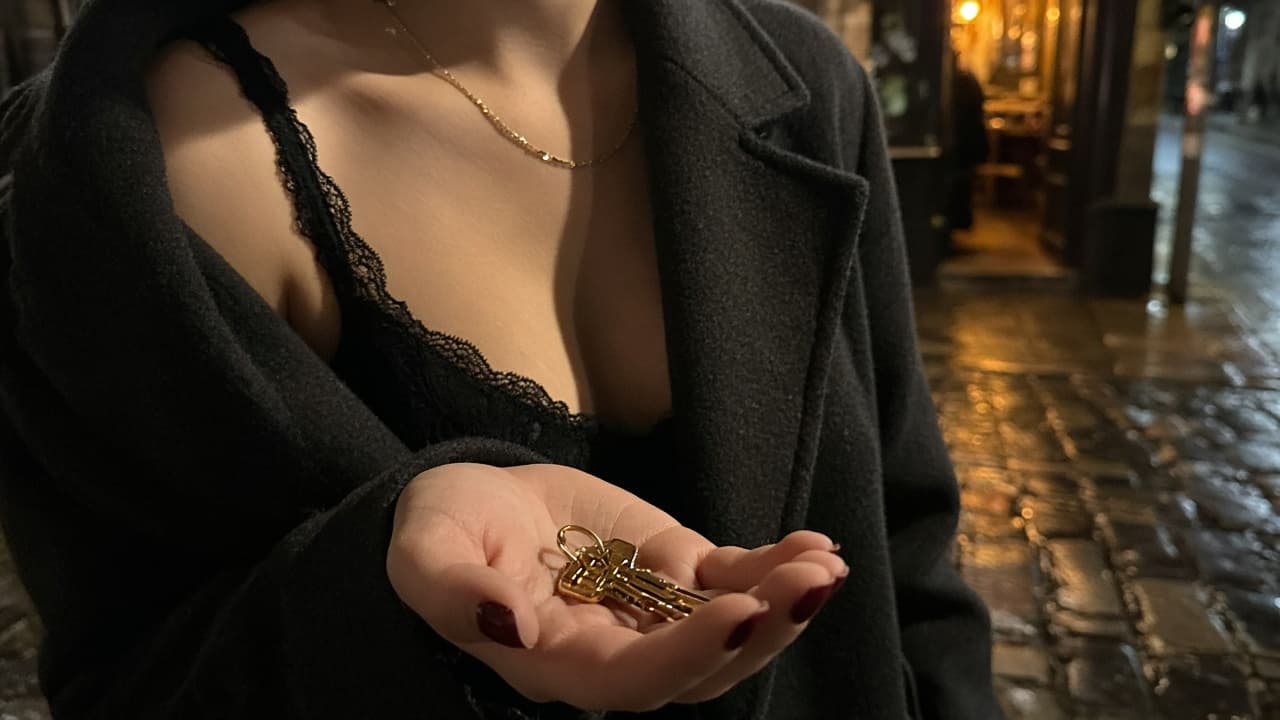
The house keys were already warm in my palm. Last orders had been called, and we were still on the pavement outside, coats buttoned, doing that polite hover where both of you know the night has a next room and neither of you wants to be the one who names it. I have spent a lot of evenings learning how to ask someone back to yours. The useful version is one sentence, then a gap. Come back to mine. Then you wait.
If they say yes, you walk. If they say no, you do not convert the no into a second offer with a kettle in it. I used to. It made everything worse.
I have mostly asked men, because that is who I have dated. The sentence is the same if you are asking a woman: a place, and a chance to refuse it.
If either of you is actually drunk, you do not ask. A yes has to be cheap to give and cheap to take back. Last orders is a clock, not permission.
How to ask someone back to yours without a hint
The hint is how I used to do it. A look. A "shall we get out of here." A mention of the heating being on at mine, as if I were offering a boiler inspection.
The worst version was coffee. Not that night. A different one, mid-twenties, after a film I could not later name. We were on the stairs up to my floor and I said I could put the kettle on. He sat at my table with his coat still zipped and waited for the drink. I sat opposite him with two mugs and a sentence I had not said. He thought I meant caffeine. I meant him staying. I had to do a second, clumsier ask once we were already sitting down, which is a terrible hour for wanting someone. He said he had work. He was kind about it. I still felt like I had tricked him into my kitchen.
I do not say coffee now, unless I actually want coffee. I say come back to mine. Or come home with me. Or I would like you to come up, and we can stop at a kiss if that is what you want. The last one is longer. I use it when I can feel myself about to hide in a household object.
Ask them to come home with you as if you are asking for a pint: a thing they can refuse without a speech. Then you let the refusal exist.
"Shall we go back to yours" is also a question. It is not a lesser one. It is a different postcode.
What I do not do is narrate my own bravery, or explain that this is unlike me, or apologise for wanting them. I have done all three. They made the other person look after my nerves as well as their own.
Say it before you share a taxi if you can. A car is a small room with no polite exit.
A dating profile can say you like late nights. It cannot say the sentence for you.
If they say they have an early start
Believe them.
An early start is a no that still wants to be decent to you in the morning. Sometimes it is also true. You do not get to audit their diary. You do not say "just for one drink." You do not follow them to the next stop with a better version of the sentence.
I have been the person who heard "early start" and treated it as a puzzle. I offered a taxi that would get them home by a time I had invented. I made it expensive to leave. He left anyway, and he left cooler. Fair.
If they say not tonight and they still kiss you, that kiss is the night. It does not mean they owe you the stairs. If they look relieved, you have your answer twice. Go home. "Got home. Would like to see you Thursday" is a different question. Do not hide Thursday inside a rejected tonight.
If they hesitate, you wait. I have filled that pause with a joke. The joke made "no" cost them a laugh they did not owe me.
Your place versus theirs
Mine is the lock I know. Theirs is a door I can leave without them knowing which stairwell is mine.
I used to default to mine because I had clean-ish sheets and I knew where the glasses lived. Then I had a man at my fridge at one in the morning, shoes still on, who I did not want standing in that light. The walk from the fridge to the door felt longer than any taxi. He had done nothing wrong. I had invited a maybe into a room I could not easily unsay.
Now I pick on purpose. Invite someone over after a date only if you actually want them in that postcode. Go to yours if you want the morning on your terms. Go to theirs if you want an exit that does not involve your neighbours, or if you have not decided you like them enough for your street. If they suggest theirs and your stomach goes flat, you do not owe a polite reason. I am going home is a complete sentence.
Neither is a failure. A long kiss on the pavement and a text about next week is a finished evening. I have treated "we should go somewhere" as a test I would fail by going home. Going home was sometimes the only honest thing I did all night.
If sex on the first date is what you both mean, say that before anyone's key is in a lock. Coming up is not consent for a bed. It is consent for a hallway, until someone names the rest.
If you mean tonight only, say tonight only while leaving is still easy. The invite is not the arrangement.
Safety for you and for them
This is ordinary, like locking the door.
If you go to theirs, I text a friend the street I am heading to. Not the live map at the table. I have skipped this because I wanted to look like a person who does not need a system.
If they go to yours, they get a way home that does not depend on your mood at two in the morning. Water. A taxi number. Permission to leave without a performance. If you would sulk at a goodbye, do not invite them.
If something on the date already felt like a red flag, the pavement is a very late place to ignore it. I have ignored it. I have also, on a better night, said I was getting my own taxi and walked to the rank.
Condoms travel with you. If they sulk at the foil, the night is over.
If they push past a no, or a maybe, or an early start, you leave. You do not stay to prove you are not dramatic.
A car is not a private place in this country in the way films pretend. If the only option is a back seat, you wait.
If you only want a kiss in the hallway
Say so.
I have invited someone up when I wanted a doorway and then felt obliged to upgrade the night because the sofa was there and I did not want to be a tease. Tease is a word other people use when they did not get the night they had privately booked. You are allowed a kiss. They are allowed to go home a bit disappointed. Disappointed is not harmed.
The sentence I use is: come up. I want to kiss you. I am not sure I want more than that tonight. If that is a waste of your time, say so now.
Some people say so. Good. You have both been spared a polite half-hour.
If they come up and the kiss is the whole thing, you do not apologise them into a bed to make the stairs worth it.
First time sex nerves can sit in a quiet that looks like a change of mind. If they get upstairs and go still, you ask. You do not kiss them through it to keep the night on the rails.
If you stay until morning, that is a separate piece of work. The street job is the ask.
FAQ
How do you ask someone to come home with you?
You say come back to mine, or come home with me, or I would like you to come up. Then you wait. You do not pad it with coffee, a film you will not watch, or a speech about how you never do this. The gap after the sentence is the kind part.
Is coffee too vague?
Yes, if you do not want coffee. I have served actual coffee to a man I wanted in my bed, because I had used a household word as a cover. If you want a cup and a sit-down, say that. If you want them in your flat because you fancy them, say come back to mine and let them answer.
What if they say no?
You say fair enough. You do not look wounded as a tactic. A no on a pavement is cheaper than a no in a kitchen. Take the cheap one. If you still want to see them, ask for a day later, when you are not standing in the leftover of a rejected invite.
Is it safer to go to theirs?
Sometimes. You can leave without them knowing your street. You also cannot control the lock or the flatmates. I pick based on the night, not a rule. If you go to theirs, someone who likes you should know the street. If your stomach is already arguing, you go home alone.
I still get the hover. I still feel the sentence in my mouth like something I might drop. I say it anyway, and I let the answer be the night. Home is a place. It is not a riddle.
4 Comments
Thanks Jessica, needed this.
Reply
The kettle-on story is painfully familiar. Straight ask from now on.
Reply
I used to turn an early start into a puzzle. Last week I just said cool, Thursday instead. Felt weirdly adult.
Reply
Come back to mine, then wait. Definately stealing that.
Reply