 Jessica Simpkin
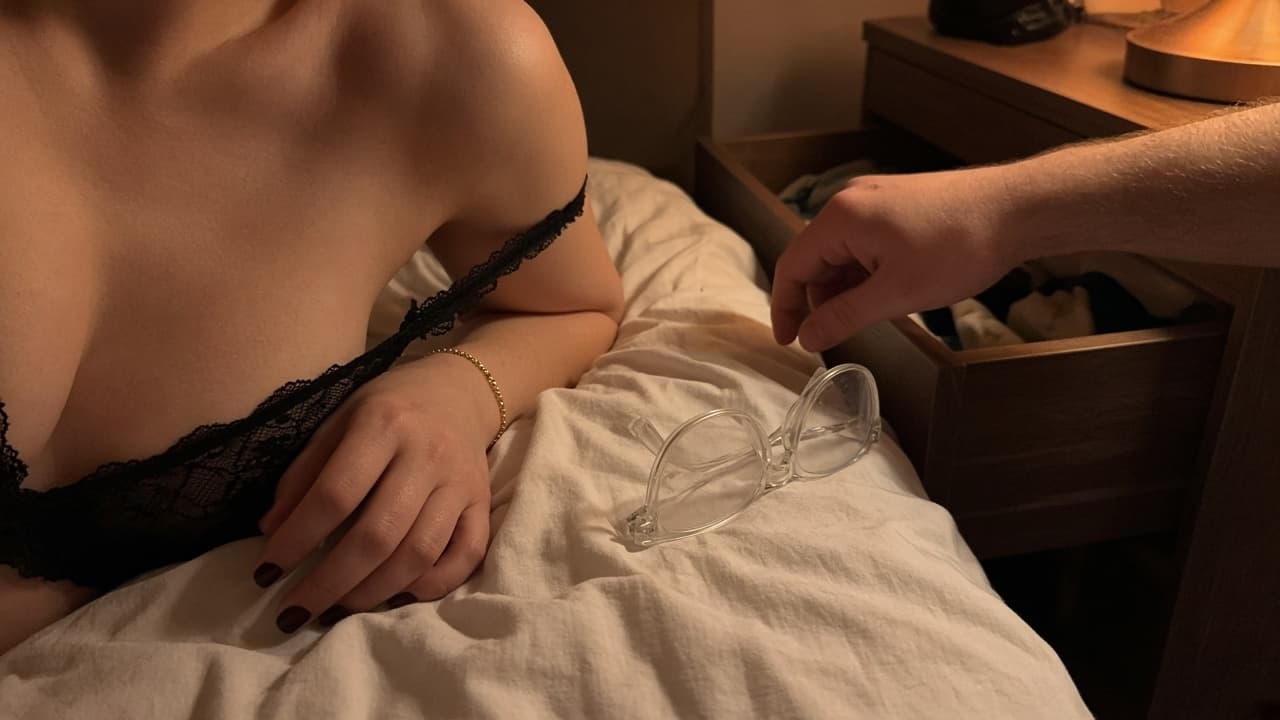
He took his reading glasses from the bedside drawer and put them on for the bit, as if that were a costume. We had agreed on one sentence before we shut the door. He managed half of it in a voice that was trying too hard. I snorted mid-character. The lenses fogged. The night got better after that, not worse, because we stopped pretending we were good at it and started playing.
If you came here for how to start roleplay in bed, the short version is this: pick a tiny scenario, agree a way in and a way out, say one line, and treat the first laugh as part of the scene rather than proof you are not allowed.
How to start roleplay in bed: pick a simple scenario
I used to overbuild. Backstory. Props. A mood I could not hold once someone was looking at me. The nights that worked started with a situation we already liked as a thought, shrunk to something we could say in under ten words.
Good first scenarios are ordinary on purpose. Night one only needs two or three, not a catalogue:
- we have not met yet (same flat, different story)
- you stayed late, I stayed late (adults at work, never anything younger)
- you are in charge of the next twenty minutes (power tilt, no job title)
None of those need a shopping-bag costume. A shut door and one line beat a full kit. The longer menu of lines lives in bedroom roleplay ideas. This piece is how you walk through the door, not a second copy of that list.
Pick one flavour between you in daylight. Not five. Not “whatever you fancy.” Specific is kinder. Vague is how one of you invents a plot the other never agreed to.
Keep it adults. Grown-up jobs, grown-up rooms, strangers who are clearly not kids. I do not write age-play. If you want a power tilt at “work,” say so as two people who clocked off, not as a school story. If you want strangers, make it two adults who chose the maybe.
Telling someone a fantasy is the daylight half. Roleplay is the half where you try a sliver once, with a stop button, without turning the flat into a set.
A code to start and stop
Say this while you still have clothes on. Not mid-kiss. Not after someone has already put on a voice and you are trapped being polite about it.
You need three small agreements:
- What we are. One sentence. “Tonight you do not know me yet.” Or “You stayed late and I am still here.”
- What we are not. The edges. No names that make either of you cold. Nothing around throats. No real third person unless that is a whole other yes.
- How we start and how we stop. A start line you both recognise. A stop that does not need a speech.
I like a start that is almost boring. “Ready?” Then the first character line. Or a knock on a closed bedroom door. Or putting a shirt back on that you do not usually wear for sex. The point is a hinge, not theatre lighting.
For stopping, use a word you would not say by accident. Red works for me. So does “pause” if you are not playing with “no” as heat. If “no” might be in the scene, you need a second language. I wrote a whole piece on safe words for couples because I once needed one in the middle of something I had asked for, and the trust after was better than the bit we stopped.
Consent here is ordinary. You lock the door. You check they still want the hinge. You stop when the word lands. Roleplay does not get a special exemption from paying attention.
You do not need an accent
I have watched people ruin a promising night by doing a voice from a film. The voice became the whole job. Nobody was left in the room.
You do not need an accent. You do not need a backstory speech. You need one true-feeling sentence in a register you can hold for thirty seconds.
Softer than porn is fine. Flatter than porn is fine. A line said quietly while you undress someone is often hotter than a monologue. If praise is part of your heat, you can fold a proud sentence into the scene without inventing a new person. “Look at you” can belong to the role or to you. Decide which, so neither of you is guessing.
Props are optional and often a distraction. Glasses, a jacket, a closed laptop on the table: one object that tips the brain, not a costume change. If the prop makes you shy before anyone has spoken, leave it in the drawer and keep the sentence.
Dirty talk and roleplay overlap, but they are not the same job. Filthy words without a story can be enough. A story without filth can be enough. Trying to do both at full volume on night one is how I went blank and asked if we could just be ourselves for a bit.
If one of you is a better actor
Someone usually is. They will find a line faster. They will not freeze. The quieter one will feel behind, then pretend they are not, then resent the whole idea.
I have been both people. When I am the better talker, my job is to leave space. Ask a question in character. Wait. Do not fill every silence with plot. When I am the quieter one, my job is a smaller part: one sentence, a look, a yes, then ordinary touch until the next line arrives.
Being “worse” at it is not a verdict on your sex life. It is information about how you get into heat. Some people need the story. Some people need the body first and the story second. Match the size of the scene to the shyer person, not to the one who watches more porn.
What I got wrong for years was treating my partner’s confidence as the standard. He could do a stranger voice on demand. I could do about eight seconds before I felt like I was in a sketch. We got further when we shrank the scene to something I could say without performing. He still got his stranger. I still got to be myself inside it.
If one of you hates it after a fair try, drop it as a couple project. Curiosity is allowed to end. Forcing a bit because a listicle said it spices things up is how you teach someone their discomfort does not count.
When to drop the bit
Drop it when the laugh stops being shared and starts being cover. Drop it when someone goes polite and far away. Drop it when the stop word lands, even mid-sentence. Drop it when you are only protecting the plot.
I used to think dropping the bit meant the night had failed. It meant the night had noticed itself. Ordinary sex after a failed scene is not a consolation prize. It is often the better half. You already warmed something up. You already proved you can laugh at yourselves. That is useful data.
Ways to leave the role without a speech:
- say your actual name once
- kiss like you, not like the character
- get water
- “out of character for a second: still good?”
- put the prop down and keep going as yourselves
If you were mean or sharp in the scene, land afterwards. A glass of water. A hand on a back. A plain sentence that you liked them, not only the story. Aftercare after kinky sex is not only for rope. It is for any night where one of you left ordinary for a while.
You can also drop the bit and restart later with a smaller hinge. Same evening. Different size. That is allowed.
The bit I got wrong
I treated the first laugh as a fail grade. I apologised for breaking character as if I had ruined something sacred. He looked confused. He had been enjoying the mess. I had been keeping score against myself.
Ridiculous is not the opposite of sexy. It is often the doorway. The nights that stayed stiff were the ones where we pretended we were not nervous. The nights that worked were the ones where we admitted the opening would feel daft, and then we did it anyway.
I also once tried to start roleplaying sexually with no stop word because “it was only light.” Light still needs a door. Light is exactly when people skip the boring chat and then cannot get out cleanly.
FAQ
How do you start sexual roleplay?
Agree the scenario in clothes, pick a start hinge and a stop word, then say one sentence and see if your bodies follow. Do not open with a five-minute monologue. Beginner sexual roleplay is closer to a game of “what if” than to a rehearsal.
What if we laugh?
Laugh. Shared laughter is heat with a sense of humour. If only one of you is laughing and the other has gone small, pause and check. If you are both still only giggling after a minute and nobody is turned on, drop the voice and have ordinary sex. That is sense, not proof you are bad at this.
Do we need a script?
No. A script is how I went shy in my own bedroom. One agreed line and a few edges beat three pages of dialogue. If you like writing, write the start sentence only. Leave the middle to the room.
What is an easy first scenario?
Strangers in the same flat, or “you stayed late,” or “you are in charge for twenty minutes.” Anything you can say without a costume shop. If you want to start roleplaying with a partner who is nervous, pick the smallest version of a fantasy you already both like as a thought, not a brand-new cinema plot.
I still feel ridiculous for the first half-minute. I start anyway, with a sentence we chose, and a way out that does not need an apology. The point was never a flawless scene. It was two people willing to look a bit daft on purpose, then stay kind when the bit ends.
7 Comments
Thanks Jessica.
Reply
Needed this.
Reply
LOVE this 😭
Reply
Agree a way in and a way out before the door shuts. Simple and good.
Reply
Any starter scenarios that work when you both feel ridiculous?
Reply
Tiny scenario under ten words. That is the bit I am stealing.
Reply
We did the fogged glasses thing almost. First line came out too try-hard, we snorted, then it got fun. Treating the laugh as part of the scene helped.
Reply